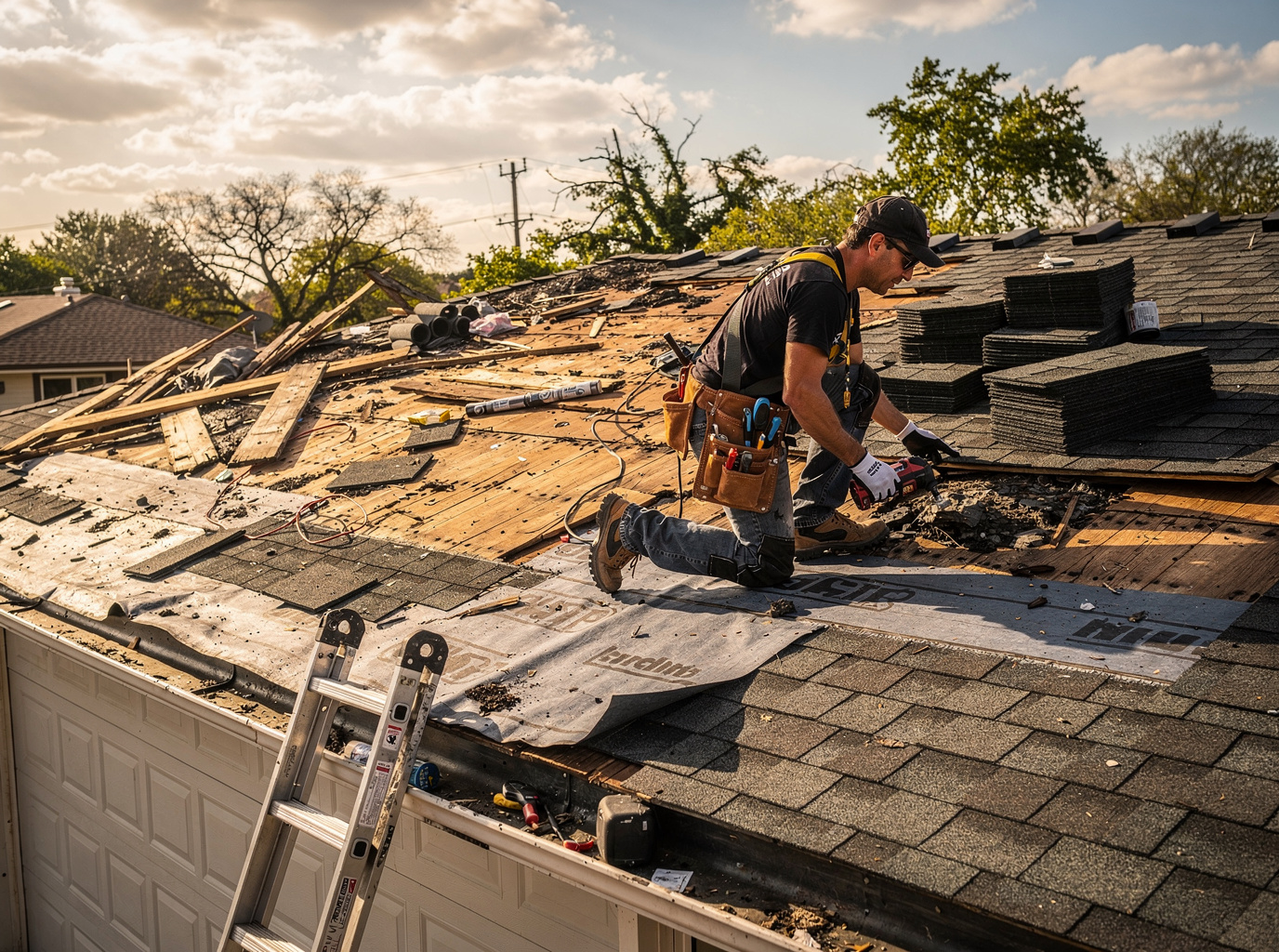
Austin experiences intense thunderstorms that bring high winds, hail, and heavy rain, especially during spring when wildflowers bloom across Travis County. These storms often impact older housing stock in neighborhoods like Hyde Park, Clarksville, and Barton Hills, where homes from the mid-20th century feature asphalt shingles or metal roofs that can suffer wind uplift or impact damage. Water intrusion through compromised flashing around chimneys or skylights leads to interior leaks that spread quickly in the area's humid conditions. Independent local providers assess visible and hidden damage using moisture detection methods suited to the local terrain near Lady Bird Lake and Zilker Park.
Roof structures in East Austin and Mueller developments face additional stress from rapid temperature swings between hot humid summers and occasional winter freezes, which can crack sealants and loosen tiles. Properties near the Texas State Capitol or University of Texas Tower often have complex rooflines with multiple valleys that trap debris during storms, accelerating wear. Independent local providers focus on matching repair materials to the original construction while complying with Travis County building codes for wind resistance. This approach prevents recurring issues common in South Congress and Travis Heights homes where tree cover increases the risk of branch impact during high winds.
Terrain variations around Mount Bonnell and Barton Springs Pool contribute to localized microclimates that intensify rainfall on certain slopes, directing water toward lower roof edges in Westlake and Zilker homes. Proper drainage integration during repairs helps manage runoff that otherwise pools against walls. Independent local providers document all storm-related damage thoroughly for insurance purposes and prioritize targeted fixes over full replacements when possible to preserve original roof integrity in historic districts.
Seasonal Storm Patterns
Austin's spring storms frequently coincide with peak pollen and humidity levels that complicate drying times after leak repairs in neighborhoods like Downtown and Mueller. Fall wind events can dislodge loose granules from aging shingles on Travis Heights properties, creating entry points for subsequent rains. Independent local providers monitor these cycles to time interventions effectively.
Technician insight
In Austin, the thing that catches most people out with Storm Damage Roof Repair is how clay soils in Travis County shift after heavy spring rains and cause subtle foundation movement that stresses roof decks on older homes in Hyde Park and Clarksville.
Hail Impact Near Zilker Park
Problem: Large hail during a summer storm dented shingles and compromised underlayment on a home in Zilker. Independent local providers found widespread granule loss exposing felt layers. What they did: Replaced affected sections while reinforcing valleys prone to debris accumulation from nearby trees. Outcome: Roof restored to handle subsequent humid conditions without further intrusion.
How it works
- 1
Initial Damage Report
Homeowners describe visible storm effects such as missing shingles or interior water stains from events affecting areas like East Austin or Hyde Park.
- 2
Provider Matching
The referral connects the request to independent local providers experienced with Austin roof types and Travis County weather impacts.
- 3
On-Site Assessment
Providers inspect for hidden moisture, wind uplift, and hail dents while noting conditions specific to local terrain near Lady Bird Lake.
- 4
Repair Execution
Targeted fixes address leaks and structural concerns using materials compatible with Austin's climate and older housing stock.
- 5
Final Verification
Providers confirm repairs withstand typical humidity and wind patterns before completing the job.