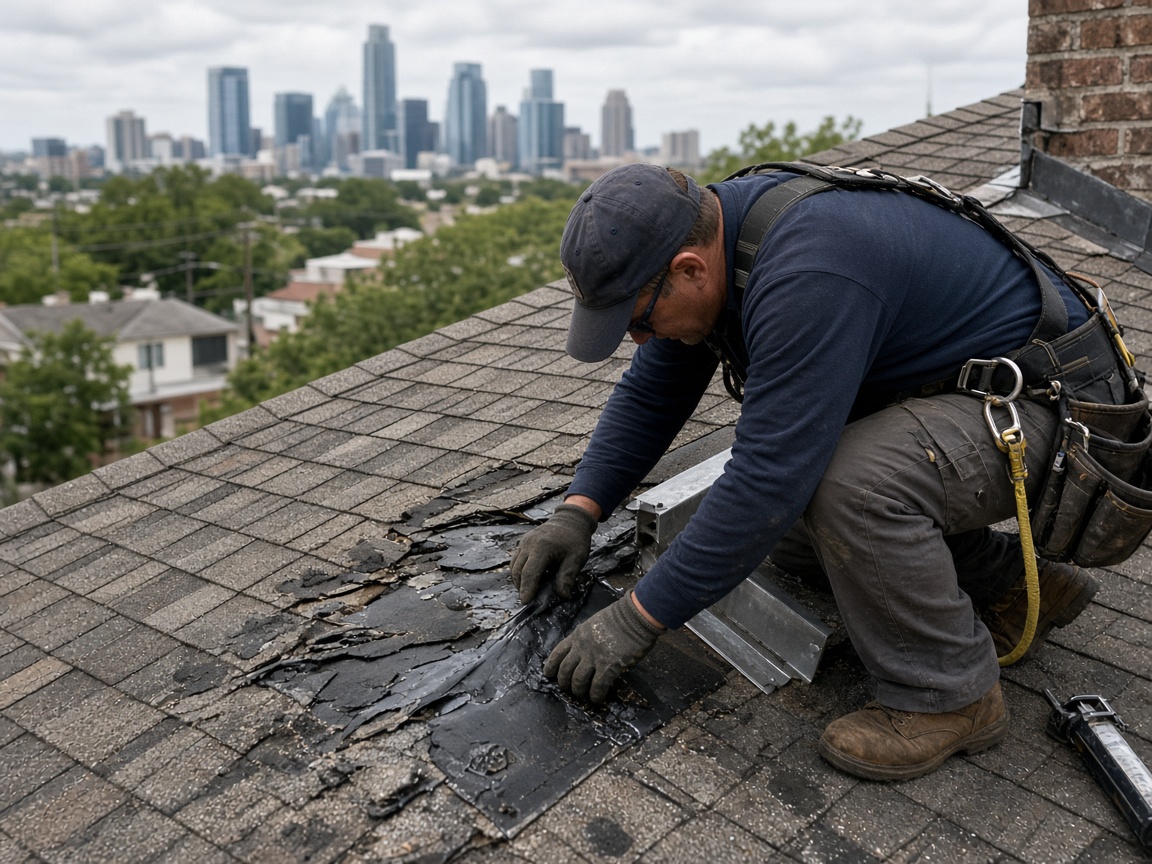
Downtown Austin mixes early twentieth-century brick buildings with newer towers between the Texas State Capitol and Lady Bird Lake. The pros we connect you with know how sudden spring storms send water under aging flashing on low-slope roofs and how humid air from the lake speeds deterioration of decking. Tight alleys and one-way streets around 6th Street and Congress Avenue limit where trucks and ladders can be placed, so crews plan lifts and tarps before they arrive.
Many structures here sit on narrow lots with shared walls, so roof work must stay inside property lines while protecting pedestrians below. Independent local providers familiar with Travis County permitting routes coordinate inspections quickly when leaks appear near Republic Square or the old warehouse districts. Hot summer sun bakes asphalt shingles and membrane seams, making evening inspections common to spot blisters before monsoon rains return.
Access to upper floors in mixed-use buildings often requires coordination with property managers along Lavaca and Guadalupe. The pros we connect you with carry compact equipment sized for downtown alleys and know which streets allow daytime staging without blocking Capitol traffic patterns.
Around Downtown
We regularly work near:
- 📍Texas State Capitol
- 📍Congress Avenue Bridge
- 📍6th Street
- 📍Republic Square
- 📍Lady Bird Lake
- 📍Austin Public Library
Emergency Roof Repair Austin in Downtown — Local Notes
- •Historic brick and wood-frame buildings near the Capitol often have low-pitch or flat sections where ponding develops after heavy spring rains.
- •Narrow rights-of-way around 6th Street and Congress Avenue require smaller equipment and off-peak scheduling to avoid blocking delivery zones.
- •Proximity to Lady Bird Lake raises ambient moisture that can trap under membrane roofs on mid-century structures, accelerating deck rot.
- •Shared-wall conditions in the warehouse district mean flashing details must tie into neighboring roofs without disturbing adjacent properties.