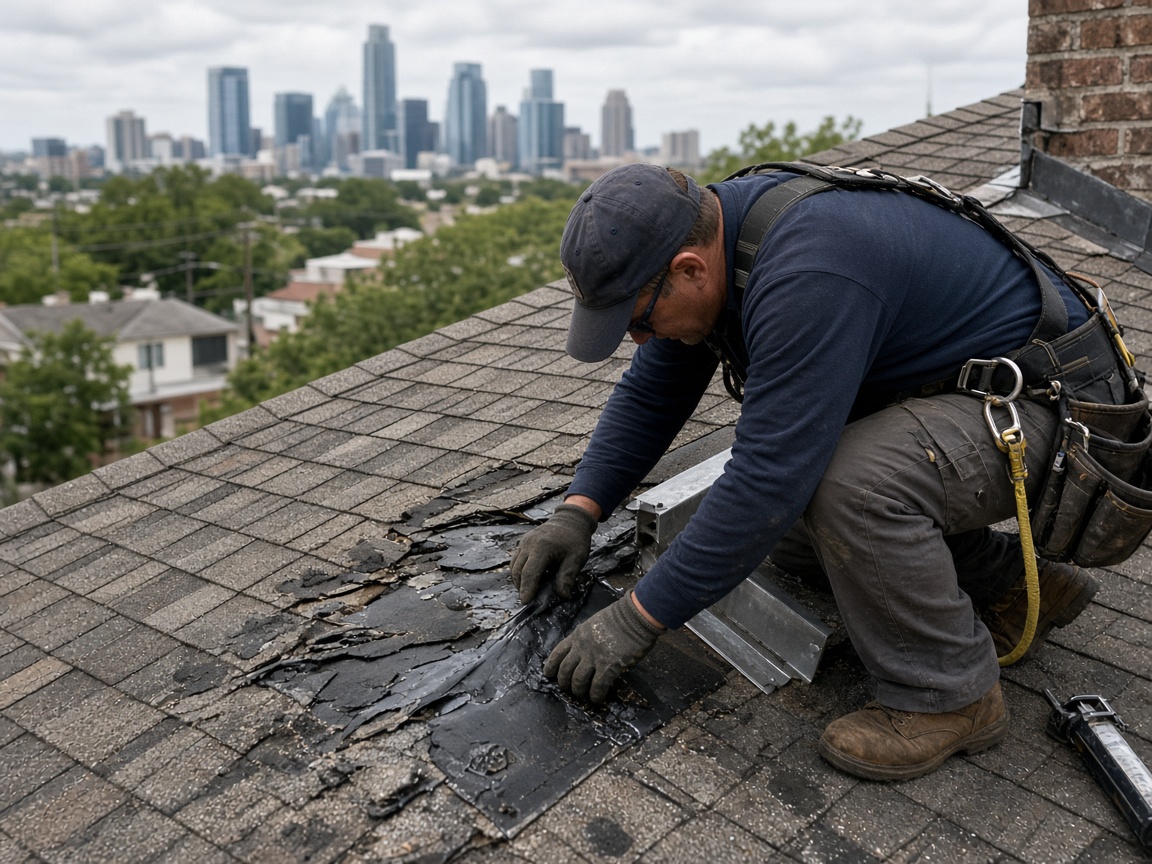
Austin's hot humid summers and occasional heavy spring rains put stress on roofing systems throughout Travis County. Homes in established neighborhoods such as Hyde Park, Clarksville, and Travis Heights often feature older asphalt shingle or metal roofs that develop leaks where flashing meets chimneys, vents, or skylights. Humidity can keep wood decking damp longer, allowing small penetrations to worsen before they are noticed from inside the attic.
Independent local providers assess leaks by checking both the exterior surface and interior framing rather than relying on obvious stains alone. In areas with rolling terrain like Barton Hills or Zilker, water can travel laterally under shingles before entering living spaces, requiring careful tracing of the actual entry point. Proper repair involves replacing damaged underlayment sections and resealing penetrations with compatible materials that hold up to repeated temperature swings.
East Austin and Mueller properties may include flat or low-slope sections that collect debris during wildflower season, creating moisture traps. The pros we connect you with examine these transitions and drainage points specifically, because missed detailing here leads to recurring interior damage. Work is performed to match existing roof profiles so that repairs blend with surrounding materials without creating new weak points.
Technician insight
In Austin, the thing that catches most people out with Roof Leak Repair is how spring rains and humidity interact with older asphalt shingles on homes in Clarksville and Barton Hills, letting water travel under the surface before showing up inside.
East Austin Roof Leak
Water entered near a vent pipe during heavy rain on an older home. Inspection showed deteriorated flashing allowing runoff to reach the decking. The independent local providers replaced the flashing section and resealed the area to stop further intrusion.
How it works
- 1
Initial Assessment
The independent local providers inspect the roof exterior and attic space to trace water entry points without assumptions based on visible stains.
- 2
Leak Source Identification
They examine flashing, penetrations, and underlayment conditions common to Austin's older housing stock in neighborhoods like South Congress and Westlake.
- 3
Targeted Repair
Damaged sections are addressed with matching materials and sealed to handle the area's humidity and seasonal rainfall patterns.
- 4
Final Verification
A follow-up check confirms the repair holds under typical conditions before the job is complete.